M.Sc. researcher in Optics & Photonics at KIT / KSOP
I work across physical simulation and experimental systems in computational optics, with an emphasis on turning optical models into repeatable measurements and research software.
Zhirong Tao, Karlsruhe
Selected research
Research topics
Selected work is organized by physical problem and method. Publication records link to the complete papers.
01
Spatiotemporal Vortex Fields
Spatiotemporal vortex fields couple transverse spatial structure with ultrafast temporal dynamics. My work focused on converting configurable physical models into repeatable measurements.
My contributionI develop simulation-to-experiment workflows for spatiotemporal vortex fields: modeling phase and optical-path configurations, automating SLM-camera acquisition, and reconstructing spatiotemporal intensity and phase using a Gaussian reference field.
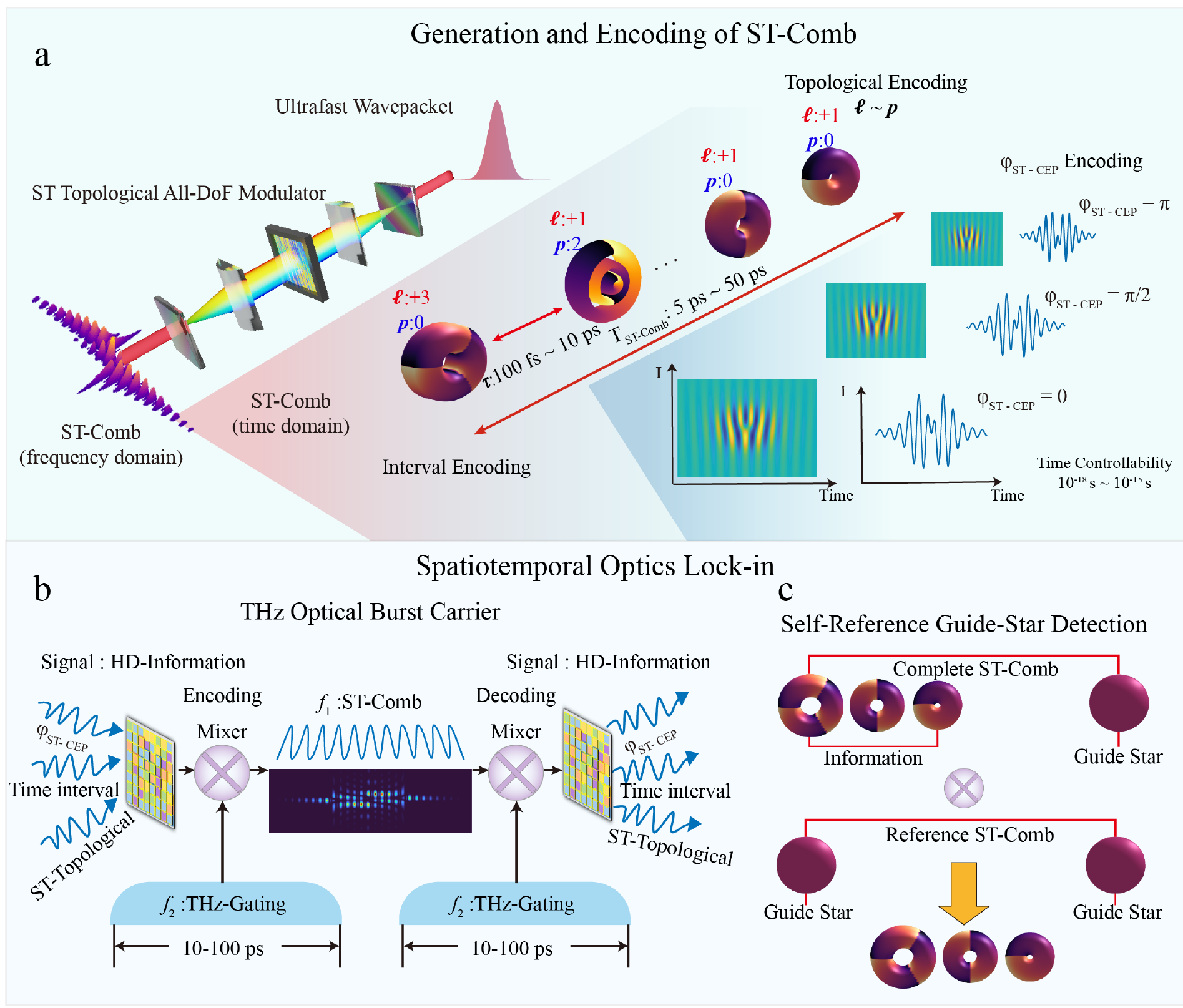
ST-Comb generation and spatiotemporal optical lock-in (Fig. 1).
Spatiotemporal Topological Combs for Robust High-Dimensional Information Transmission
The work combines a burst-like temporal comb with independently configurable spatial topology, creating a high-dimensional optical state space. The selected figure shows how the comb is generated and how optical lock-in moves encoded information away from conventional low-frequency noise.
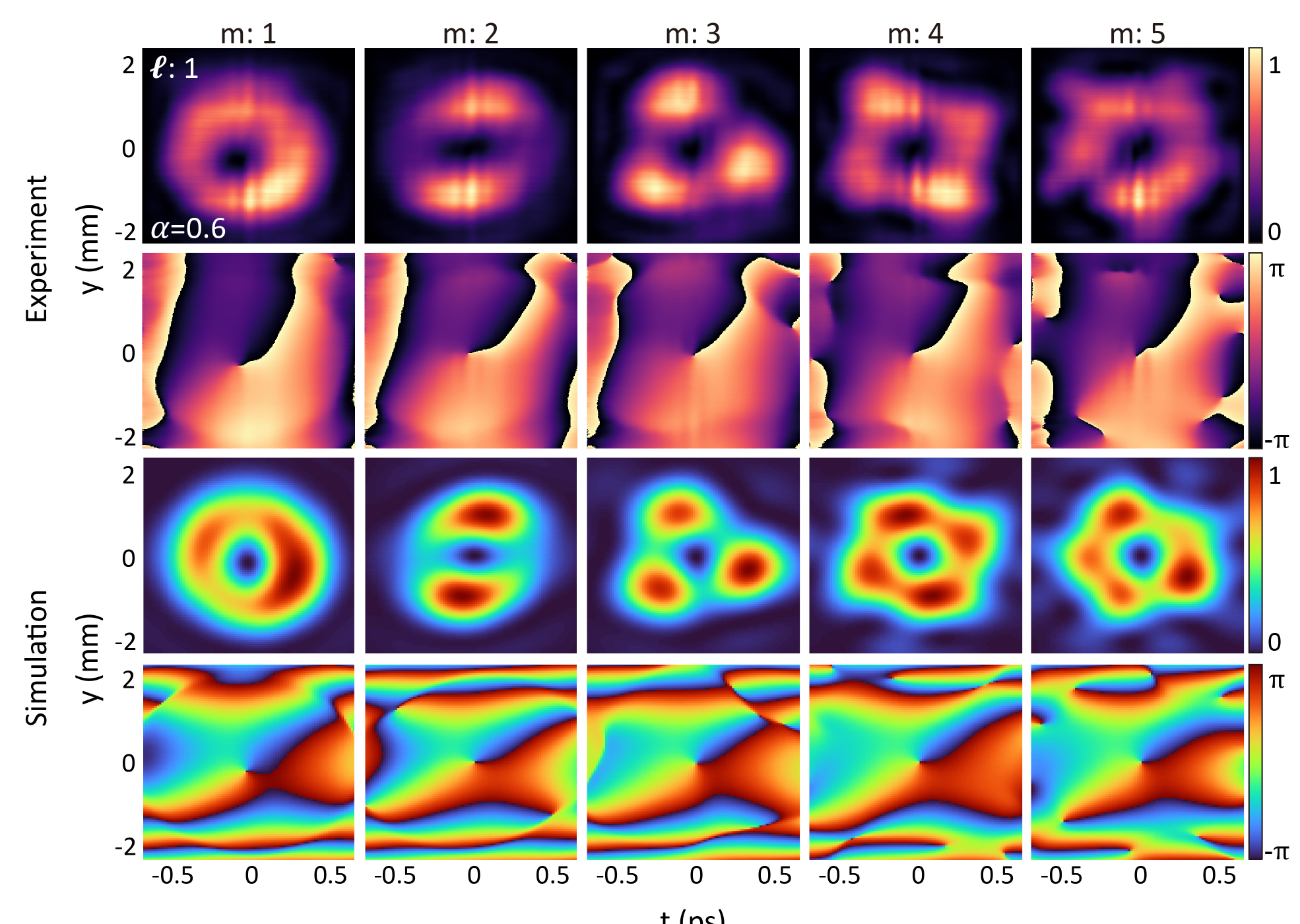
Experiment-simulation comparison across modulation frequency (Fig. 3).
Spatiotemporal flux breathing and topological sculpting in structured transverse orbital angular momentum lattices
Azimuthal modulation reshapes a transverse-OAM field into non-uniform spatiotemporal vortex lattices whose singularity geometry changes with the modulation frequency. The figure places measured intensity and phase beside simulations, making the relationship between the programmed phase, optical propagation, and reconstructed field directly visible.
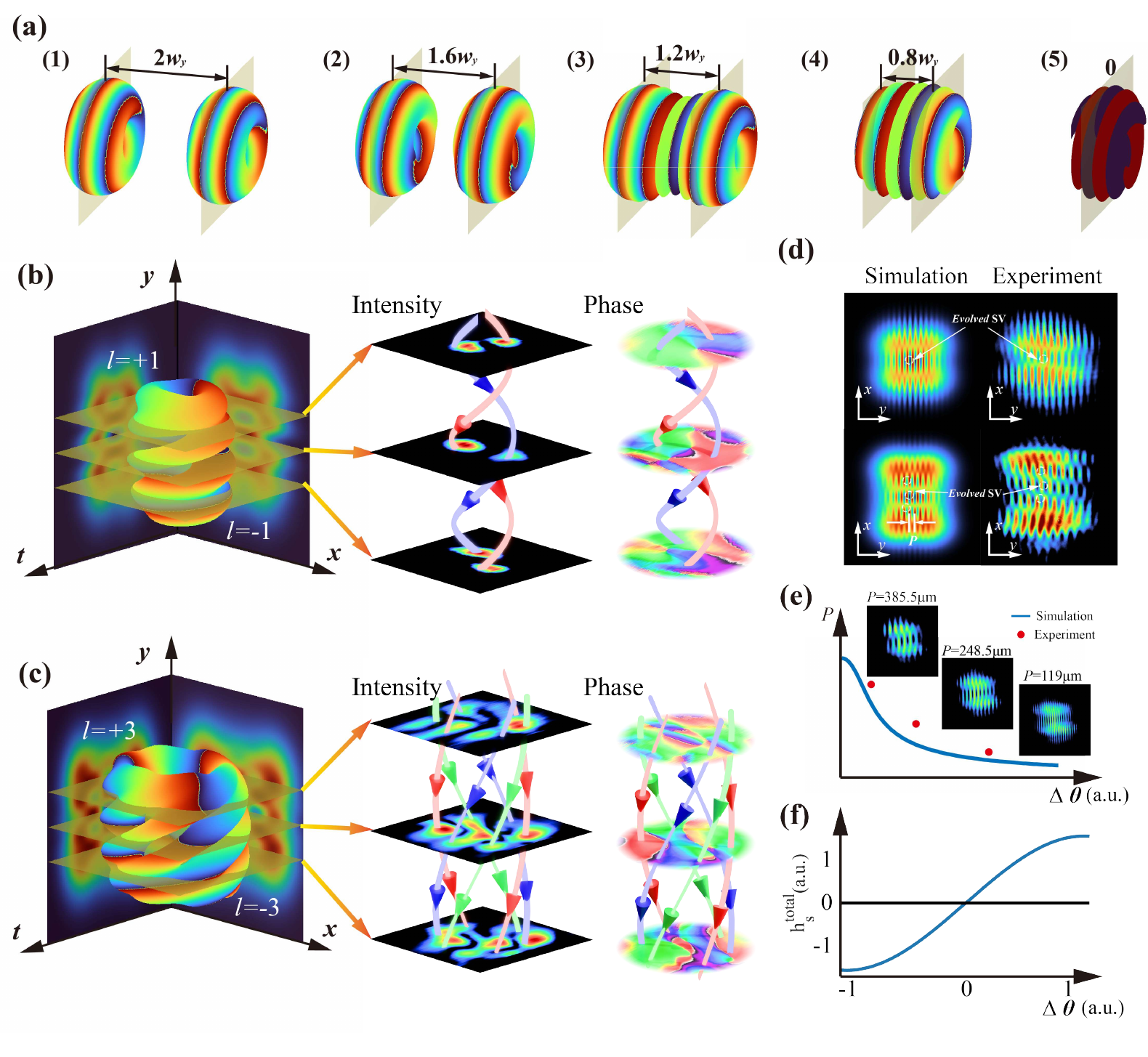
Optical-coil formation, reconstruction, and chirality control (Fig. 4).
Generation of Spatiotemporal Optical Coil with Controllable Transverse Intensity Chirality
Non-collinear collisions between spatiotemporal optical vortices form a volumetric optical coil whose handedness is carried by the intensity trajectory itself. The selected figure connects the collision geometry, helical field structure, tomographic reconstruction, and controllable transverse chirality.
02
Optical Inverse Design
Inverse design uses differentiable optical models to search for structures that produce a requested optical response.
Research work
Diffractive inverse design for multicore-fiber beam shaping
Under review
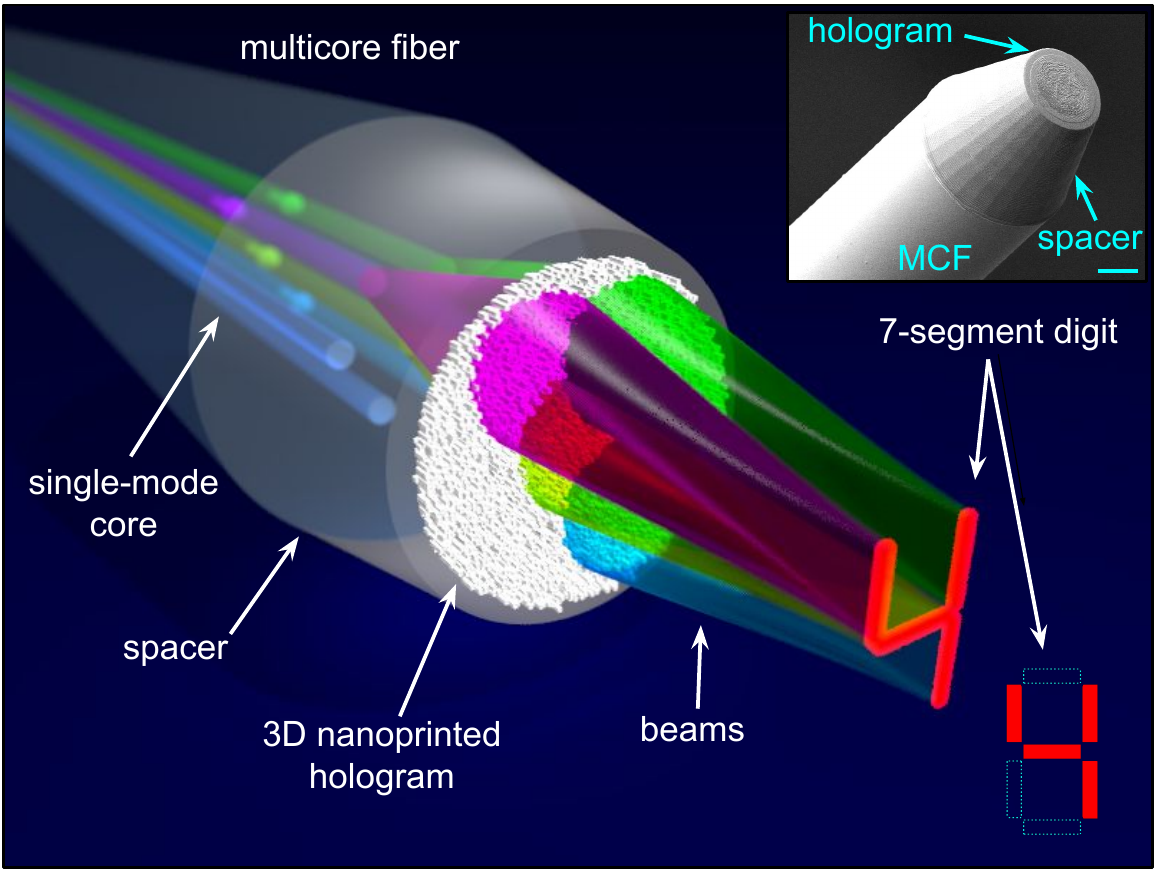
A multicore-fiber application in which a micro-optical diffractive element coordinates the emitted fields so propagation produces a requested intensity pattern.
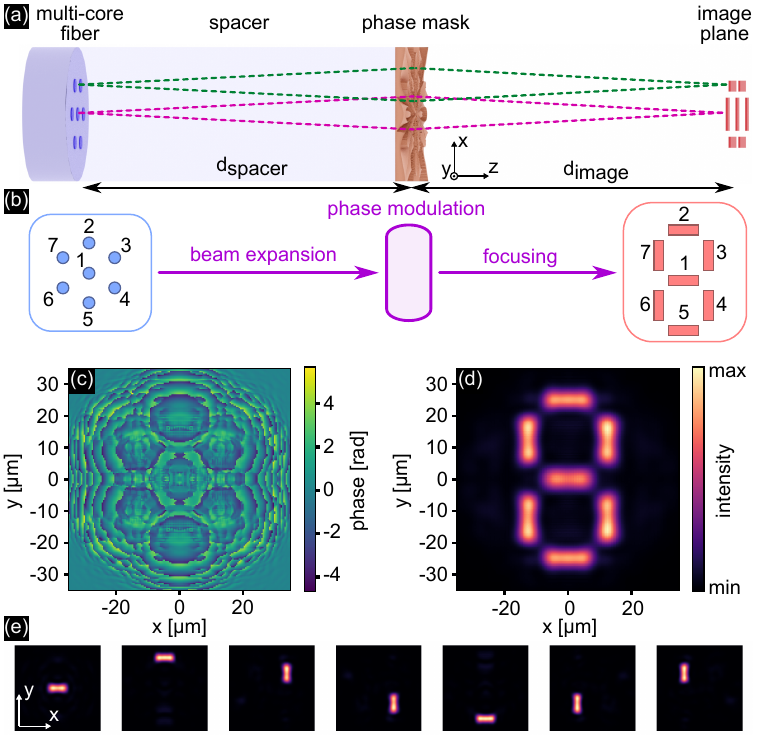
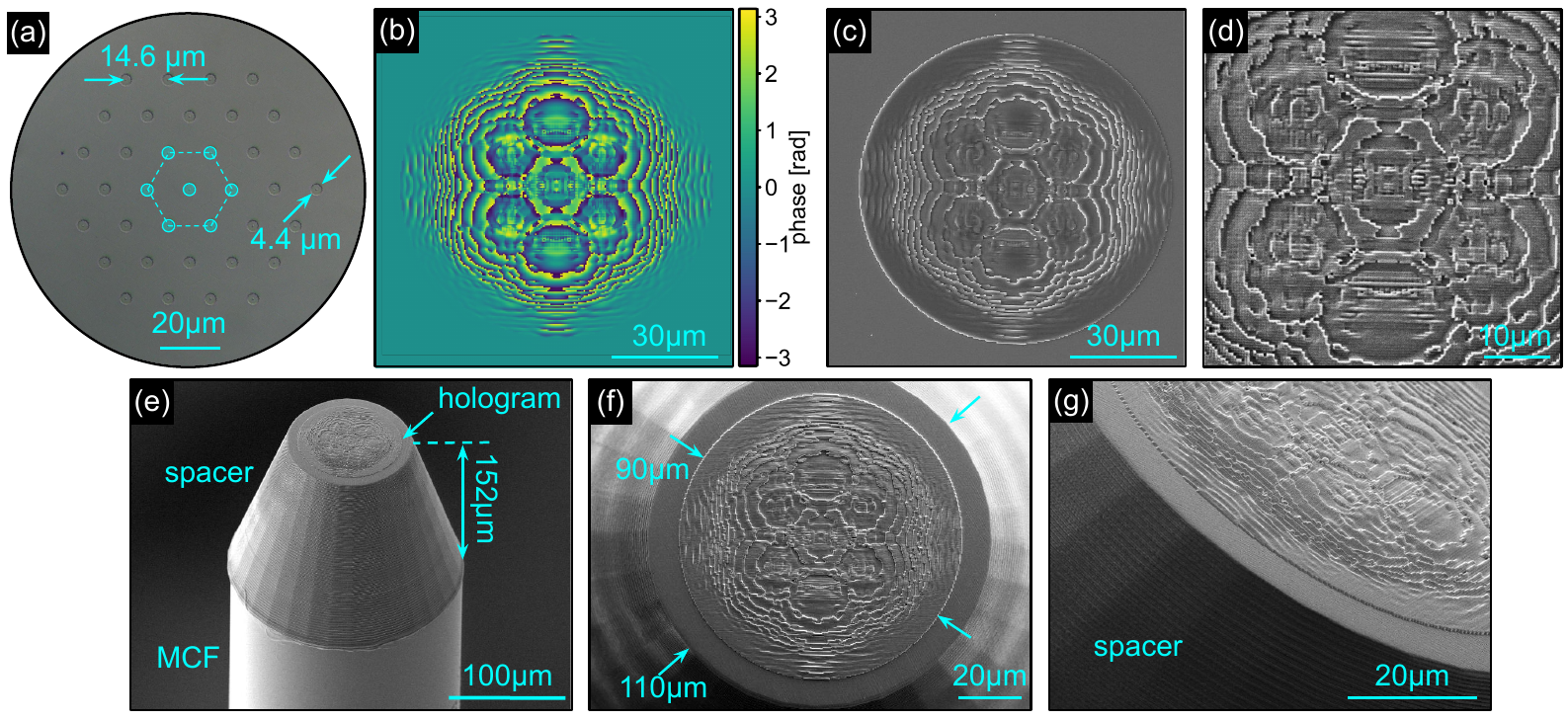
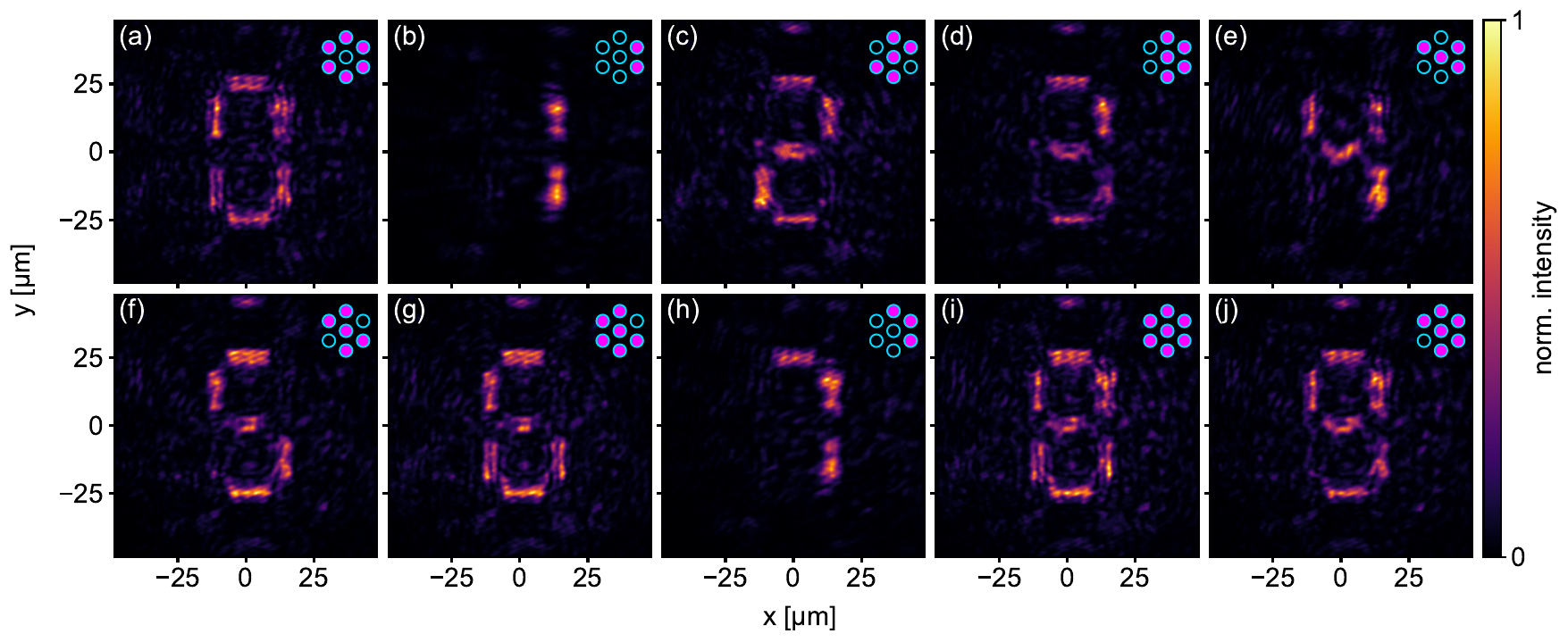
My contributionDuring my internship in the Rockstuhl Group, I used Python, JAX, and PyTorch to optimize diffractive phase distributions through differentiable optical simulation, then connected the numerical design to fabrication and experimental evaluation.
Optical system and target-field concept.Phase-distribution optimization workflow.Numerical design transferred to fabrication.Selected experimental output sequence.
03
Compressive Spectral Sensing
Research internship
A simulation study of how measurement design affects the information retained by a compressive spectral-imaging system.
My contributionDuring my research internship in the Rotter Group at TU Wien, I implemented hyperspectral sensing simulations, evaluated reconstruction behavior under different sampling strategies and noise conditions, and studied CRB-guided measurement design as a quantitative link between physical acquisition and estimator performance.
Joint project by Prof. Michael Kaschke and Prof. Holger Cartarius.
Porting MATLAB-based computational examples for the optics volume to Python, with attention to numerical consistency, readable scientific code, and reproducibility.